
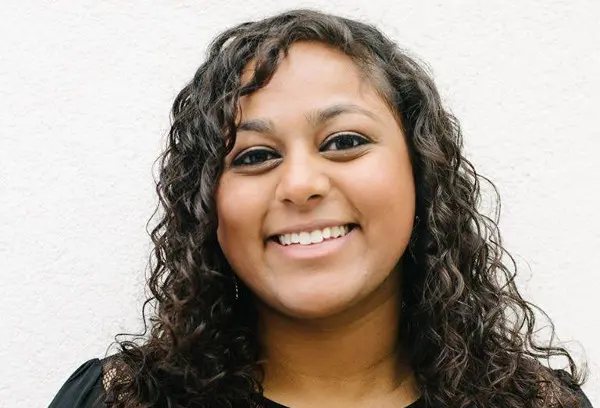
The first time 24-year-old Sandhya Kambhampati was stopped by an officer in Berlin, she had gone to a park for a morning jog after arriving in the city days before.
The officer asked her what she was doing, where she lived, and for her ID. When she told him she only had her keys, he said she should always carry identification and left.
At first she thought it was a one-time incident: yet another new German thing she would learn as she came to know her new home.
“When I was stopped, I was so jet-lagged and tired that day that I honestly didn’t even know what was going on,” she told The Local.
By the third time, Kambhampati says she knew something wasn’t right.
“I thought, ‘this is annoying. Now it’s getting frustrating’,” Kambhampati says. “It wasn’t just one or two times.”
Nine months later and she had been stopped and checked by police a total of 23 times - while going to a museum, going to the U-Bahn station, or while out to socialize, being picked out of a group of white friends.
READ ALSO: 'Abuse of power': black travellers describe their ordeals with German customs
“It really makes you feel like an outsider. I have never felt so much like an outsider as I have in Germany,” Kambhampati says.
“I don’t feel welcome and that bothers me the most because I think about especially the large number of refugees that are coming in and being welcomed into the country… I’ve heard from some that have said they were racially profiled and don’t feel at home. They should feel at home.”
But since she’s a journalist who came to Berlin to work for investigative news initiative Correctiv, Kambhampati didn’t let her feelings of frustration stop there.
She met with Berlin police department’s press spokesman, who apologized and said the checks could be seen as illegal. But he also noted that officers wouldn’t search a “blond, German-looking person,” before later saying this wasn’t what he meant.
Kambhampati first wrote about her experiences in an in-depth article for Vox last month, which can be read here. And now she’s working on an investigation with her colleagues at Correctiv, looking to find others who have had similar experiences.
Different histories, different discussions
Growing up in New Jersey and studying in Ohio, Kambhampati said she had encountered discrimination in the US as well, and similar issues of racism exist in both places. But the different immigration histories of the two countries also seems to have affected how people act today.
“In Germany, many people assume I’m from India based on my skin colour rather than considering that I could be from somewhere like the US,” she explained.
“I’ve gotten that before in the US, but not as much. Maybe it has to do with the way that different people have come to the US for generations now.
“Some people that I’ve spoken to who have experienced racial profiling have been living in Germany their whole lives… and they still don’t feel like they are welcomed into the German society. And that’s largely in part because they’re stopped and asked questions like this.”
In her reporting now on racial profiling, she has found that some who have not experienced racial profiling are surprised by her account, or even don’t believe her - which is part of why she’s looking for others to share their stories to show the scale of the issue.
Another issue is that there is no real German version of the term racial profiling - German media in fact often use the English phrase. So when Kambhampati interviewed German police departments on their policies, using the term Personenkontrollen aufgrund ethnischer Merkmale - literally checking people based on ethnic characteristics - some thought she was accusing them of racism.
“I think that has a lot to do with the history of the word ‘race’ in Germany,” she said.
“In the US on the census, you label yourself as black, Asian, Latino, so on and so forth. Whereas here there’s no labeling of what your race is... It has to do with your nationality, not necessarily your skin colour or your background.”
But after Cologne police were accused by German politicians and Amnesty International of racial profiling on New Year’s this year, the topic has gained new attention in the country.
Debate about the police’s actions was sparked after the force tweeted that hundreds of “Nafris” - a term short for North Africans - were being stopped by police. Critics like Amnesty International denounced their methods, calling racial profiling a “violation of human rights”.
As details are still coming out about what happened, Kambhampati said it is too soon for her to form an opinion. But she did note that there can be a gray area about using racial profiling from a security perspective during large events - and in such situations it can be unclear whether an officer stopped someone because they appeared suspicious, or simply because they appeared to be of a certain ethnicity.
However, when police are stopping people during everyday, mundane activities - as happened to her - there needs to be a further conversation, she added.
“I don’t think this is something that can be changed overnight or in a year. It is something that police officers and higher authorities can work together on to decide how to deal with racial profiling. It also needs to be discussed when to do it and when not to do it.”
Which is why she hopes her reporting project can help to demonstrate the scale of the phenomenon in Germany - and provide others with a means to discuss their experiences.
“While what happened to me is important to tell, I’m a reporter first and I want to report on other people’s stories as well,” she said.
“This is not just my story, but theirs to share as well.”
For those who want to share their experiences, you can fill out the form in this link for English and this link for German, or reach Kambhampati at sandhya.kambhampati@correctiv.org.
Comments