
“Waste not, want not," your grandma probably told you hundreds of times when you didn’t quite fancy finishing off the vegetables on your plate.
German grannies are just the same, exclaiming, “Iss deinen Teller leer, dann gibt es morgen gutes Wetter” (“Clean your plate, then there’ll be good weather tomorrow”).
Whether you speak English or German, the principle is the same - wasting food will not win you any brownie points.
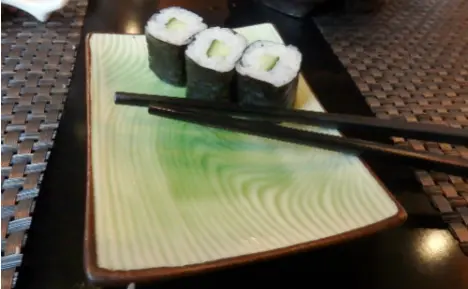
With this in mind, Yuoki, a sushi and grill restaurant in Stuttgart in the southern state of Baden-Württemberg, has started charging customers a fee if they don't finish their meal.
The "Taste 120"-offer gives guests two hours to treat themselves to an all-you-can-eat buffet.
But if their plates aren't clean at the end of the feast, they have to pay €1.
“It’s called ‘all-you-can-eat’, not ‘all-you-can-chuck-away,’” explains owner Guoyu Luan.
Having been in the business for over 20 years, he is only too familiar with plates piled high with buffet food and the inevitable mountain of rubbish which the leftovers create.
“As a restaurateur, you obviously don’t want to upset any guests. But some guests exploit the ‘all-you-can-eat’ system,” he adds.
But Yuoki isn’t the only restaurant which charges customers for leftovers.
Okinii, a Japanese restaurant in Düsseldorf (the capital of North Rhine-Westphalia) charges guests €1 for leaving cold food on their plate, and €2 for warm food.
“Waste is not appreciated - so please only order as much as you can eat”, its website advises.
Chinese-Mongolian restaurant Himalaya in the town of Menden in North Rhine-Westphalia has also jumped on the bandwagon.
Staff have considered adding a surcharge of €2 to the bill for leftovers of over 100 grams per plate.
Although Germans are sticklers for separating their rubbish, they’re not so careful about what they actually get rid of, a study undertaken by the University of Stuttgart on behalf of the Federal Ministry of Consumer Affairs has revealed.
The average German bins 225 grams of food every day, of which only a third is actually fit for the bin, the study shows.
Yep, Germans truly live in a “Wegwerfgesellschaft” - a throwaway society. Every year, each German discards food to the value of about €235, according to the study.
Back at Guoyu Luan’s restaurant in Stuttgart, customers are on board with the scheme. The restaurant is packed out and all the plates are empty.
Not only does the scheme prevent food waste, but it also contributes to helping those in need.
Rather than pocketing the money from the leftovers fee, the owner has donated the estimated €900 to €1,000 that he has collected so far to charity.
Comments