

UPDATE: As some of you guessed, this story was actually an April Fool - we can't imagine the Germans introducing such a scheme any time soon.
The plan is part of a larger effort by the ministry to fight alcoholism and binge-drinking, and was pushed by the state-funded Netzwerk für Alkoholismus und Rauschgifte Recherche (Network for Alcoholism and Drug Research, or NARR).
“Alcoholism is a serious problem in our country and one which we need to tackle head-on,” chief NARR researcher Carl Doofmann told The Local.
Germans consume more alcohol per capita than the European average, according to the World Health Organization, and are among the top beer drinkers in the world, beat out only by the Czech Republic and Austria, according to Kirin Beer University.
Officials are especially concerned about growing trends of binge-drinking among young Germans between the ages of 15 and 20. Between 2000 and 2014, the number of youths hospitalized due to alcohol and acute intoxication rose from 7,320 to 19,444, or by 165.6 percent, according to the Federal Statistics Office.
A previous proposal had entailed a government alcohol monopoly like Sweden, Norway and Finland have to regulate consumption, but this was shot down as too impractical.
The health ministry said it plans to keep the labels simple, imitating those found on cigarette packets which say “smoking can be deadly” by declaring “drinking can be deadly”.
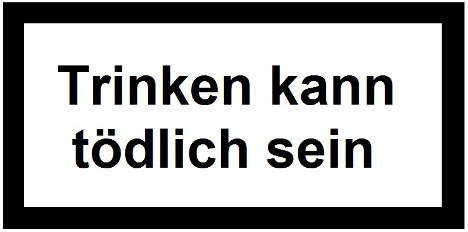 Photo: NARR.
“Young people are extremely concerned with how they look and taking good selfies, so we want to remind them that drinking can actually make you look not so cool,” he explained.
NARR’s suggestion would include an image of a man or woman with a beer belly, along with the caption “drinking can be ugly”.
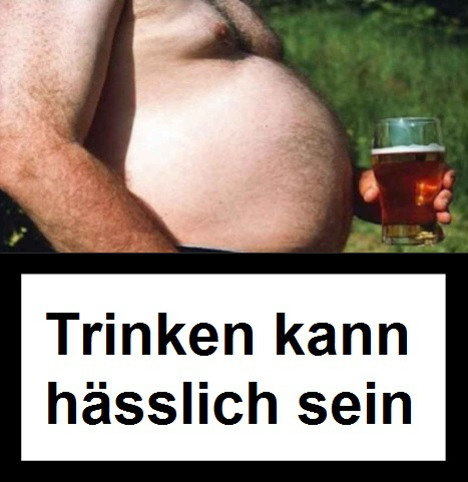 Photo: NARR.
“We can’t force people to stop drinking in excess, but at least we can subtly remind them what the impacts are on their future well-being,” Doofmann said.
But not all are enthused about the new labels.
Alcohol producers will be required to foot the cost of placing the extra labels on bottles themselves, just like cigarette manufacturers, or face a hefty fine.
This could force companies to raise prices, which business owners say in turn may cause them to lose customers, especially in the beer market as Germans have over time been chugging back less and less beer.
Germans' consumption of the nation's beer last year fell to the lowest it has been in 25 years, the national statistics office said in January.
“Germans are already drinking less and less beer, and now they [NARR] want to remind us about beer bellies,” Bielefeld-based Flunkerei Brewery said in a statement.
“There are better ways to fight alcoholism than with these scare tactics.”
Comments