
Chancellor Angela Merkel may have recently declared that multiculturalism is officially dead in Germany, but Turkish-German sisters Yasemin and Nesrin Samdereli would disagree.
“No. The patient isn’t dead yet. We’re right in the middle of it,” said Yasemin, who co-wrote the film with her sister, and is also the the director. “It takes time and effort.”
The duo, whose parents were among the many Turkish immigrants to arrive in post-war Germany as “guest workers,” used their memories of growing up as foreigners to show a more positive side of the story than has often been portrayed on film.
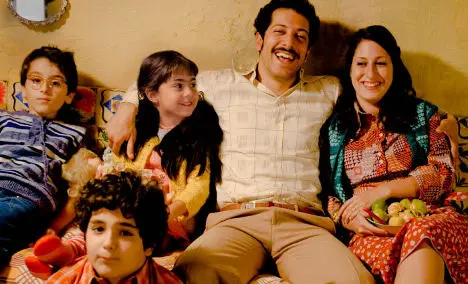
The plot centres on fictional Turkish guest worker number one-million-and-one, Hüseyin Yilmaz, who decides after retirement to take his family back to Turkey to rediscover their Anatolian roots. The children are transported back to their childhood memories of arriving in their new German home – a place full of blond giants who eat pork, walk rats on leashes, speak gibberish and worship a terrifying wooden figure nailed to a cross.
“I think it’s good to laugh with each other and about each other, and not take things so seriously,” said Yasemin, describing how both Germans and Turks have approached the sisters after screenings to thank them for the fresh perspective.
Many films about the Turkish-German experience – such as Fatih Akin’s award-winning “Head On” and Feo Aladağ’s “When We Leave” – have focused on the heartbreaking problems that arise from the clash of two cultures. While the sisters acknowledge the importance of such work, they also felt something was missing.
But the German film industry wasn’t quite ready for a feel-good film on immigration when they first set out to find funding, the Samdereli sisters said.
“It was quite difficult to get investment,” Yasemin explained. “People often said, ‘Don’t you think it’s far too positive? Don’t we need to talk about things like killings and violent brothers?’ But it’s not like this side of the story hasn’t already been told.”
More than three million Turks make up Germany’s largest group of foreigners, but while the two women were growing up, most films about people like them were made by Germans, they said.
“We couldn’t identify with these characters,” Nesrin said.
One film, the 1988 drama Yasemin, made a particular splash in Germany, detailing the tragic story of a Turkish teen who falls into a forbidden romance with a German man.
“It was really cliché, one of the first movies about immigrants, and people would ask us if it was really bad living as a Turkish girl, or if our father was as mean as the one in the film,” Nesrin said.
Yasemin, who shares the name of the film’s main character, said she felt people did not believe it was not her own story.
In fact, the Dortmund-born sisters grew up in a supportive family that strove to integrate – though they still knew they were different from the society around them.
Yasemin recalls having her thick, dark hair admired by elderly German women, along with frequent comments from adults about her excellent German. But it wasn’t until she was six or seven-years-old that she understood what it meant to be an immigrant.
“Then it hit me. Turkish people live in Turkey, Greeks live in Greece, but wait, why do I live here? I felt I wasn’t supposed to be here,” she told The Local.
For Nesrin, the realisation came much earlier at age three of four, when she became conscious of the need to learn German to play with her school friends. Later on she was the only Muslim girl at a Catholic primary school, enthusiastically singing church hymns and even playing the traditional character of Funkenmariechen in regional Karneval parades.
The sisters also remember yearning for Christmas, envious of their German friends, even goading their mother into staging the holiday at home – an event that turned out to be a complete “flop.”
As a young teenager, Nesrin said she asked herself whether she was Turkish or German.
“I had to accept there was no quick answer to that,” she said.
It’s an identity crisis mirrored in the film, when six-year-old character Cenk Yilmaz, the child of a Turkish father and German mother, is chosen for neither the Turkish nor German side in a football game.
Ultimately the Samdereli sisters say they hope their film will hope viewers overcome their own prejudices.
“It’s important for people to see the family as simply a family, and realize there’s not much difference between the cultures in that way. Families are the same all over the world,” Yasemin said.
Comments