
In the first half of 2010, there were 15,579 applications for asylum in Germany, according the dry figures from the country’s Interior Ministry. Betraying nothing of the lives behind the numbers, the information is conveyed in impassive black and white.
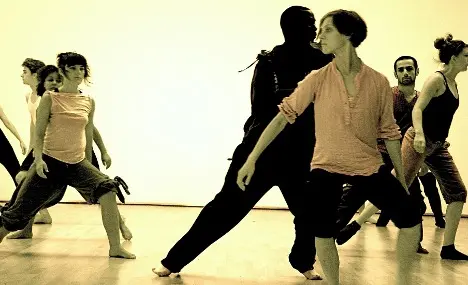
But the lis:sanga dance company wants to put faces to the figures. Its upcoming performance, “PASS,” a production that explores the relationship between a person’s official status and deeper issues of identity, will take place in the transit area of Berlin’s former airport Tempelhof on August 27 - 29.
Statistics and charts outlining the complexities of an asylum seeker’s path in Germany will be presented in official documents included with the programme. But what happens on stage tells a story that the statistics can’t: The fear, frustration, hope, anger, and sorrow involved in waiting to see if an application for legal status will be accepted, rejected, or put on hold.
For many of the 50 dancers performing, this is not an abstract question. Among the diverse group, who range in age from five to 75, there are a number of asylum seekers, including some arriving in Germany as unaccompanied minors fleeing war zones.
Many of the dancers have experienced the immigration system’s bureaucracy from the inside, and the production draws, in large part, on their stories. Onstage, the dancers bring to life “the long wait,” as choreographer Lenah Strohmaier puts it, that asylum seekers and other immigrants undergo while their status – and fate – is determined.
Lis:sanga, which means ‘community’ in the Congolese language Lingalá, was founded by the Berlin-born Strohmaier four years ago. A classically trained dancer and choreographer, she had spent several years working in India and Africa.
In 2003, she taught dance for the Berlin Philharmonic project in which “problem children” learned to dance to Stravinsky’s ‘The Rite of Spring,’ filmed as the documentary “Rhythm Is It!” Strohmaier, who personally helps guide many of the young asylum seekers in the group through Germany’s bureaucratic jungle, started lis:sanga with dancers who had taken part in a dance, theatre and video production about war called “KRIEG” and who wanted to keep working together.
Since then, the group has struggled to find financing, but succeeded in staying together. “This is high-quality, serious art,” said Royston Maldoom, the British choreographer who, along with Sir Simon Rattle, led the Stravinsky project. “It’s not dilettantish, it’s not amateurish. At the same time, it’s about community. It’s art, and it’s social work.”
In a very hands-on way, lis:sanga deals with integration – a hot topic both in Germany and Europe as a whole. “It doesn’t matter what social status you have, here,” said Abra Kennedy, a 30 year-old Polish-Liberian who grew up in Berlin but held a Polish passport for much of her life. “We come here to dance. It doesn’t matter how old you are, where you’re from, what kind of car you drive, what you job is.”
The 20-year-old dancer Friedrich Pohl, who described his background as ‘totally German,’ said that dancing with lis:sanga and working on projects like PASS were important for him on many levels. While gaining an awareness of problems he might not otherwise encounter is one benefit, what he takes away from the experience is more personal.
“The question is not just ‘what is it like for these people?’” he said. “But, what kind of city do I live in? Who are we, actually? And what kind of place do we live?”
PASS will play August 27, 28, and 29 at 8:30 pm at Berlin’s Tempelhof Airport
Comments