
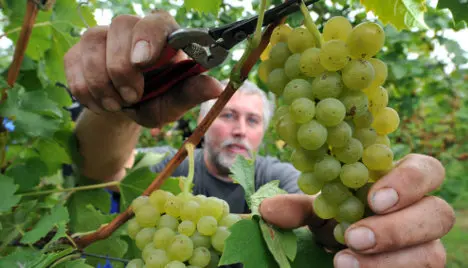
The weather was particularly well suited for a fine vintage, head of the Mosel region’s wine association Adolf Schmitt said.
“It’s going to by typically fruity Riesling wine that will have a choice aroma,” he said of the region’s most important grape variety.
But this year many blooms were delayed across Germany’s 13 wine regions, meaning that the harvest was between 20 and 40 percent smaller than a normal year depending on the grape variety.
The southern Baden and Württemberg wine regions also reported about 20 percent fewer grapes, but that it was ideal late season weather for quality grapes – a sunny autumn with cold nights.
“The vintage is a dream,” said Gerhard Hurst, president of the Baden regions wine growers' association. “We have healthy grapes. It was an uncomplicated harvest.”
In the Rheingau region along the northern side of the Rhine River in the state of Hesse, vintners also reported a harvest of exceptional quality, thought it was not particularly fruitful either.
“We can be happy about a very good vintage and hope that that will also be honoured by the price,” head for the Rheingau wine association Harald Sperling said.
Wine growers in the Nahe region in the state of Rhineland-Palatinate attributed their small but fine harvest to an unusually dry August and September, which meant that grapes had a lower juice content.
Only the eastern Saale-Unstrut region reported a higher harvest volume this year.
“The must weights are on average 10 percent higher than last year,” wine association leader Gerald Lange said, attributing the success to the warm early autumn. “Must” is the freshly pressed fruit juice that makes up the first step of wine production.
Comments