
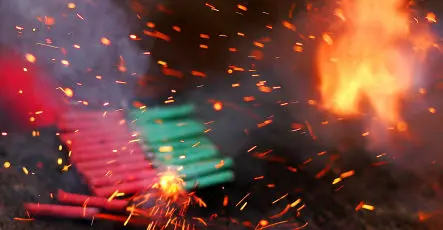
Some 28 percent of fireworks widely available to consumers didn’t pass BAM’s safety test, the organization announced on Thursday. Retailers aren’t allowed to sell fireworks for the Silvester celebrations without BAM approval, but they are still available illegally at street stands or under the counter. But party animals should not underestimate the number of serious injuries that occur each year from faulty fireworks, BAM said.
“They are more powerful and that can lead to really nasty injuries and even dismemberment,” Lutz Kurth, a BAM pyrotechnics expert told The Local on Friday, adding that possession of pyrotechnics from outside the country is illegal.
While most of the dangerous fireworks come from China and Poland, imports from Austria and Switzerland can also easily maim a New Year’s celebration, he said.
“If one of those stand-up fountains fell over into a crowd gathered around in a circle and the thing continued to shoot across the street, it will be ‘a memorable evening’ for everyone,” Kurth mused.
Kurth and his BAM colleagues tested 202 varieties of firecrackers so they could inform consumers about the warning signs for dangerous explosives. “If the instructions come in German, it’s always a good sign and probably safe,” he said. “But hands off things with a CE-mark,” he stressed. “That doesn’t exist for fireworks yet and is therefore completely worthless.”
Fear of faulty fireworks shouldn’t mar Silvester celebrations, though. “If you buy your fireworks from big supermarkets, common chains or trustworthy distributors, you’ll be fine,” Kurth said.
German law divides fireworks into two categories. Pyrotechnics without sound effects are legal year round, meanwhile loud display fireworks are legal from December 31 at 6 pm to January 1 at 7 am.